Identity
An Anthology
Human beings constantly wonder what their place in the universe is or struggle to find out who they really are. This Anthology explores the complex meaning of identity. Everyone's identity is constantly changing because no one ever truly knows who they are. As one grows older, they discover new things and how they identify themselves, people constantly wear masks of what they believe society wants them to be, and a person's identity tends to mimic the identities around them. No one will ever find one exact answer of what identity really is, as it is something that is made up of numerous factors and is ever-changing.
"What Does My Headscarf Mean to You?" by Yassmin Abdel-Magied
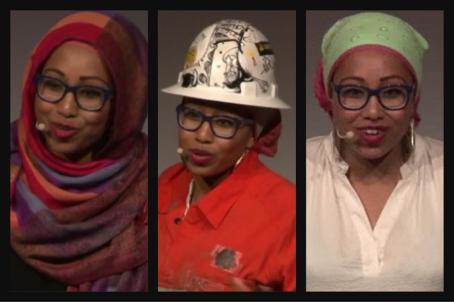
Yassmin Abdel-Magied wearing her different outfits.
Excerpt:
"Someone who looks like me, walks past you in the street. Do you think they're a mother, a refugee, or a victim of oppression? Or do you think they're a cardiologist, a barista, or maybe your local politician? Do you look me up and down wondering how hot I must get or if my husband has forced me to wear this outfit? What if I wore my scarf like this? (covers mouth) I can walk down the street with the exact same outfit and what the world expects of me and the way I'm treated depends on the arrangement of this piece of cloth. But this isn't going to be another monologue about the hijab, because Lord knows that Muslim women are so much more than the piece of cloth they choose to wrap or not wrap their head in. This is about looking beyond your bias. What if I walked passed you and later on you found out that actually, I was a race car engineer, I designed my own race car, and I ran my universities race team? Because it's true. What if I told you that I was actually trained as a boxer for 5 years? Because that was true too. Would it surprise you? Why? Ladies and gentlemen, ultimately, that surprise and the behaviours associated with it are the product of something called unconscious bias or unpleasant prejudice and that results in the ridiculous detrimental lack of diversity in our workforce. Particularly in areas of influence." (Abdel-Magied)
Analysis:

|
Podcast.m4a Size : 1615.367 Kb Type : m4a |
Music by: MACROFORM, "Simplicity". (Used Creative Commons licensed music)

|
Written Podcast.pdf Size : 46.741 Kb Type : pdf |
"Sojourners" by Annie Dillard
Excerpt:
"The planet is less like an enclosed spaceship—spaceship earth—than it is like an exposed mangrove island beautiful and loose. We the people started small and have since accumulated a great and solacing muck of soil, of human culture. We are rooted in it; we are bearing it with us across nowhere. The word “nowhere” is our cue: the consort of musicians strikes up, and we in the chorus stir and move and start twirling our hats. A mangrove island turns drift to dance. It creates its own soil as it goes, rocking over the salt sea at random, rocking day and night and round the sun, rocking round the sun and out toward east of Hercules." (Dillard)
This essay metaphorically represents the relationship and similarities between a mangrove tree and human identity. Dillard argues that once a mangrove tree is adrift, it is able to find a way to survive independently, just like how humans can never be completely sure of where they will go or whom they will become, they simply survive. Dillard explores human identity and how ever-changing, expanding and, unknowing it is. This source supports my claim as it insinuates that you cannot assume someone’s identity as it is something that is ever-changing.
Learn more about this essay by reading Annie Dillard's book, Teaching a Stone to Talk or click this button to download the document:

Tropical mangrove trees.
"Carlos Doesn't Remember" by Malcolm Gladwell
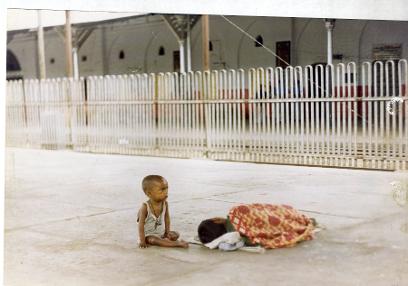
Homeless children.
Excerpt:
"So what happens to Carlos? He gets lucky. Lucky because the foster care situation works itself out, he forgets all the bad stuff that’s happening, he takes care of his sister, he reestablishes his contact with Eric and Alina and they find him another private school. Not Choate, not a boarding school, something closer to home. But whatever you do, don’t call this story inspirational because it’s not. It’s depressing because it says that if you live in Lennox and things go awry, you have to have an Eric and an Alina in your corner and be as tough and single minded and one in a million as Carlos is to make it out. That’s why the capitalization of talent is such an issue, because these are really long odds." (Gladwell)
Gladwell’s podcast touches on the identity of bright kids who grow up in poverty. He explains why the argument, ‘people growing up in poverty just need to try harder’ is short-sighted. The reality is these kids with boundless talent and potential, who live a life of horror and destitute poverty, cannot change their identity because America will not recognize that capitalization is a big issue. Overall this podcast explains that, for many, identity cannot be changed. This contradicts my argument as this source explains that sometimes society and culture dictate the outcome of certain groups’ identities making certain biases true. Unfortunately, sometimes people do not have the power in changing who they are and how they live.
A Thousand Splendid Suns by Khaled Hosseini
Excerpt:
"Yet as she closed her eyes, it was not regret any longer but a sensation of abundant peace that washed over her. She thought of her entry into this world, the harami child of a lowly villager, an unintended thing, a pitiable, regrettable accident. A weed. And yet she was leaving the world a woman who had loved and been loved back. She was leaving it as a friend, a companion, a guardian. A mother. A person of consequence at last. No. It was not so bad, Mariam thought, that she should die this way. Not so bad. This was a legitimate end to a life of illegitimate beginnings" (Hosseini, 224)
A Thousand Splendid Suns is a story of the oppression of women and how even in such bleak conditions there is still hope for them. Hosseini explores the problem of how female identity is viewed in Afghanistan. The identity of women is viewed as objects in this time period and society, and is still very relevant today, all around the world. Women can change the identity society has forced them under by helping one another, and fighting for their rights. This shows that identity can be changed and is not always dictated by society’s stereotypes and bias.
Learn more by reading the novel, A Thousand Splendid Suns by Khaled Hosseini or click this button to view PDF file:
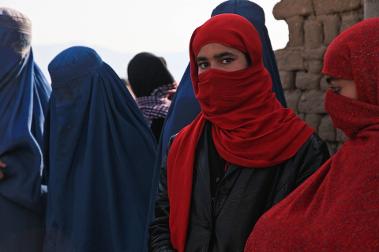
Afghan woman wearing a burqa.
"Can TV Make Us Not Hate Ourselves?" by Scaachi Koul
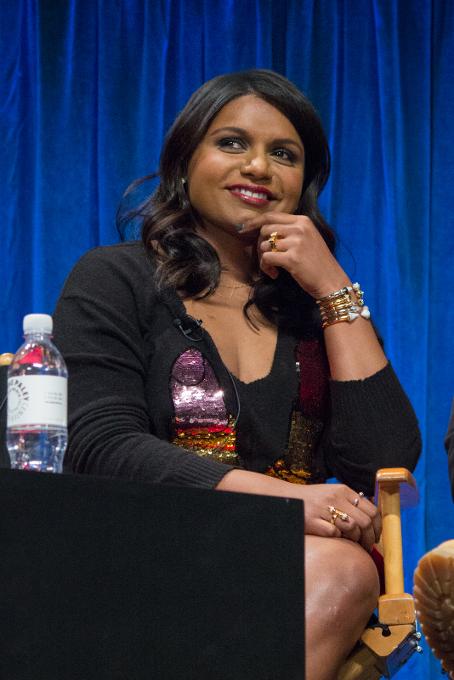
Famous brown actress, Mindy Kaling.
Excerpt:
"The whole world felt white when I was younger. There wasn’t a version of me anywhere—few on television, fewer in movies, and none in my day-to-day life who weren’t related to me...The absence of people of colour in movies and television has a dehumanizing effect for the people it neglects to portray: You can’t be what you can’t see.
Without any South Asian romantic leads, or news anchors, North Americans see women like Quantico's Indian lead, Priyanka Chopra--but more likely, men who look like her female relatives--and think, cab driver or terrorist? It sounds paranoid, but to the people so poorly represented on a screen (if ever), it feels true. When I was a young, brown girl living in a world that only reflected white people back to me, I found brown boys appalling for precisely all the reasons my television told me to. And the small pieces of the world that did resemble the wide bridge in my nose or the dynamics of my family were often so unrecognizable that I grew to hate them instead." (Koul)
Analysis:
“The absence of people of colour in movies and television has a dehumanizing effect for the people it neglects to portray: You can't be what you can’t see.” accurately explaining how much representation of one's culture can greatly affect people. Scaachi Koul’s essay, “Can TV Make Us Not Hate Ourselves” focuses on race and representation in pop culture exploring the importance of cultural identity. In this essay, Koul expresses her perspective on her race and culture, as compared to what is seen in mainstream media. She writes about how as she was growing up, she felt isolated due to the colour of her skin because all she would see on television were primarily white people. Culture greatly shapes our identity and the amount of representation of one's culture can significantly change one's identity, for better or for worse.
This article brought up some very strong points that are major issues in today’s society. It made me reflect, bringing these questions to surface: Why isn't there more people of colour on television? And when there is, why do they have to be degrading roles like a cab driver, the nerdy friend, or a terrorist? Why has Hollywood not already realized that there needs to be more representation of minorities? To this day, these questions go unanswered. Although Koul explores these questions in her essay, "Without any South Asian romantic leads, or news anchors, North Americans see women like Quantico's Indian lead, Priyanka Chopra--but more likely, men who look like her female relatives--and think, cab driver or terrorist? It sounds paranoid, but to the people so poorly represented on a screen (if ever), it feels true. When I was a young, brown girl living in a world that only reflected white people back to me, I found brown boys appalling for precisely all the reasons my television told me to." She slightly answers these questions by hinting that Hollywood and it's prejudices, make people believe that the identities of these minorities are degrading things like a cab driver or a terrorist. This results in people resenting their own culture, or forming biases or stereotypes of another culture.
I can strongly relate to Koul when she writes, “The whole world felt white when I was younger" she exaggerates this to emphasize how much she felt out of place where she lived and because of all the whitewashing on television. As a Filipino, when I was growing up as a kid, I dealt with these culture-shaming ways as well, as I never seemed to see myself in the media. I always wanted blue eyes, blonde hair, and I didn’t like when my family would speak Tagalog (Filipino dialect). I agree with Koul that this is due solely because of lack of representation. Fortunately, as I grew older, I learned to love and be proud of my culture, positively shaping my identity.
Culture shapes one's identity. Without culture, no one will have a sense of where they came from, any beliefs or morals to learn from, or share a resemblance in their looks with other people. Culture creates different religions and beliefs, gives one a unique appearance, and forms a community. Ultimately, everyone would be the same, if culture did not exist. One cannot be reduced to a small portion of their culture; they are living beings that exist, through observation. One must observe proper representation to be able to embrace their culture, ultimately growing and shaping their identity in a positive light.
Human identity is made up of numerous factors like personal, social and cultural experiences. Identity is dynamic, expanding and unknowing. It is true that sometimes one's identity can be molded by society, making it difficult for people to change who they are. Although, when we don't listen to society, work together, and fight for change, we can break social norms and mold our identities the way we, as individual human beings, wish. Another key aspect of identity is culture, as one's background and upbringing play a huge role in shaping their sense of identity and belonging. No matter how hard you try to keep your identity from changing, it will change. It is up to you to determine how you will change it by the kind of people you surround yourself with, what you do on social media and your acceptance of your own culture.
Has usage rights for images provided | By: Anna Topacio